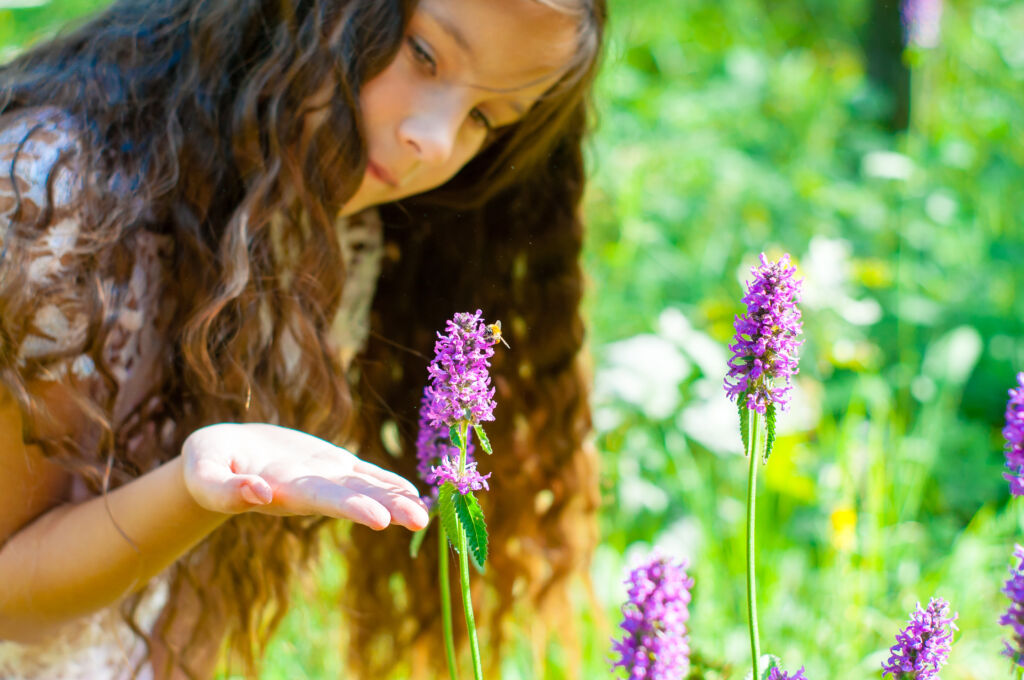
Now is a great time to adopt an important cause. Kids can use their innate curiosity and intelligence to learn about our natural world and help save the honeybees. Honeybee populations fluctuate from environmental and other factors. There appear to be multiple causes including colony collapse disorder, pesticide use, viruses, parasites and insufficient food supply.
About a third of the food Americans consume comes from crops that are pollinated by honeybees. Plants in neighborhoods and parks need to be pollinated in order to reproduce and make seeds so their species will not die out.
In school, children learn that we are all responsible for the future sustainability of our ecosystem and our planet. Kids have the power to raise awareness, to educate others and to help protect and preserve species. For Earth Day on April 22, consider these 10 opportunities to help your child learn about and help the honeybees.
Get some books about honeybees from the library and research honeybees on the internet. Study pictures together so you and your child can recognize honeybees and other bee
species. Look at photos of the inside of honeybee hives and notice the structure, organization and efficiency of bee colonies.
Look for honeybees in your yard and garden, at the park or at camp. Take photos without getting too close. You can enlarge them to get a closer look.
Appreciate bees while they are at work pollinating. Give them plenty of space and watch to see exactly what they are doing.
Plant native flowers in home gardens, public gardens and flower pots. Honeybees are attracted to purple, blue, white and yellow flowers. Herbs, flowering fruit and vegetable plants will also nourish honeybees.
Plant clover in your lawn and, if possible, leave a meadow area of uncut grass in your yard. Honeybees love clover, which produces small white, pink or reddish blooms.
Provide water for the honeybees to drink. Bees need to be able to stand near the edge of the water to drink or bathe. A shallow plastic dish of water with flat rocks in it will work. Honeybees will stand on the rocks to reach the water. Use a clear or light colored bowl to keep the water from overheating.
Talk it up. Spread the word about encouraging honeybees to other children. Share about honeybees at camp or school. Make a poster, project or webpage to educate people about the bees.
Make flyers on your computer to educate people about attracting honeybees by providing a habitat for them with flowers, plants and accessible water. Tell others not to use pesticides. You can color the flyers by hand with crayons or markers or use computer clip art. Put the flyers in neighbors’ mailboxes and post around town on bulletin boards at the library, the town hall and the grocery store. Mail flyers to your local and state government officials and to newspapers.
Visit a beekeeping farm to learn more about harvesting honey. Look in books and online for images of beekeeping. Maybe you will want to become a hobby beekeeper.
Buy local or U.S.-made honey rather than imported honey. Honey can be used in place of sugar in recipes. Try baking with honey—yum! Honeybees are our friends. We need them to pollinate our flowers, plants and our nation’s food crops. Honeybees are very important to our environment and our planet.
Sarah T. Yale is a nature-loving, working writer mom whose children
are learning to love the natural world and to do their part now and
in the future to sustain and preserve the planet.
Want To Know More? Explore These Learning Resources:
“The Honey Makers,” by Gail Gibbons
“Honeybees,” by Joyce Milton
“Busy, Buzzy Bee,” by Karen Wallace
“The Life and Times of the Honeybee,” by Charles Micucci
“What If There Were No Bees?: A Book About the Grassland Ecosystem,” by Suzanne Buckingham Slade
National Honey Board (honey.com)
United States Department of Agriculture (usda.gov)
What To Plant
Flowers To Attract Honeybees
• Wildflowers
• Dandelions
• Asters
• Cosmos
• Lilacs
• Clover
• Wisteria
• Zinnia
• Marigolds
• Geraniums
• Black-eyed Susan
• Sunflower
• Hyacinth
• Snowdrops
• Tulips
Flowering Plants To Attract Honeybees
• Tomatoes
• Cucumbers
• Melon
• Squash
• Flowering broccoli
• Berries
• Pumpkins
• Peppers
Herbs To Attract Honeybees
• Basil
• Chives
• Lemon Balm
• Mint
• Sage
• Thyme
• Rosemary
• Lavender
• Fennel
• Bee Balm