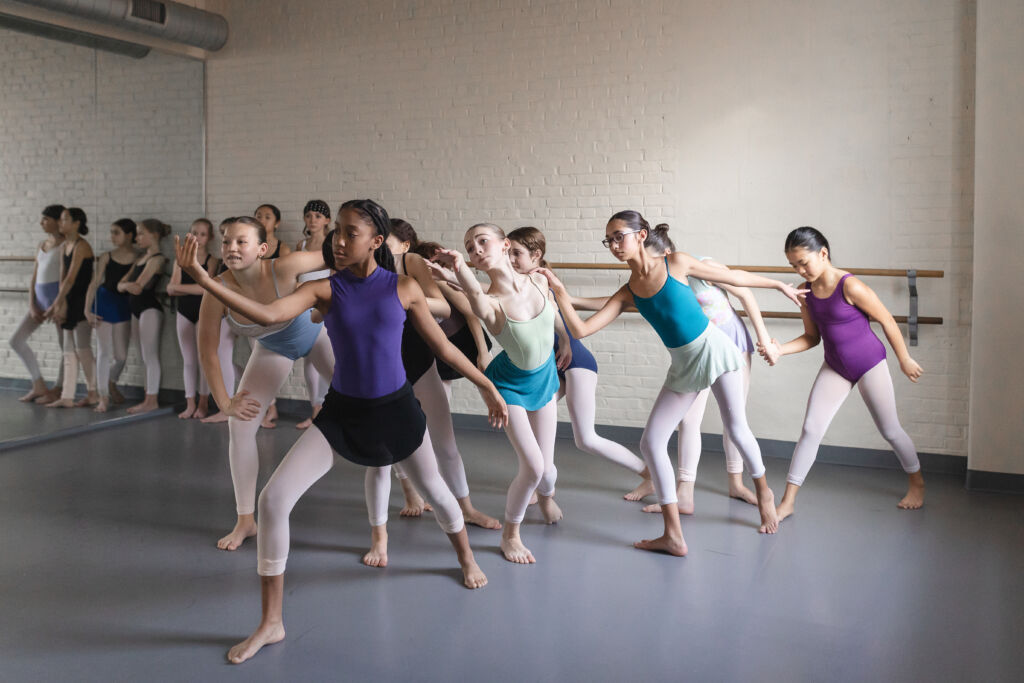
For decades, dance has sparked debate: Is it primarily an art form or should it be recognized as a sport? Could it be both art and pure athleticism? Across Philadelphia, youth dance programs challenge the notion that it must be one or the other. Many local studios now embrace dance as both creative expression and rigorous physical discipline, with students growing not only as artists, but as athletes.
The Athletic Side of Dance
Behind the elegance of dance lies intense physical training. Graceful movements and choreography are crafted through hours of repetition, strength and core conditioning. Dancers develop endurance, coordination, flexibility and balance — skills that mirror those required in traditional training. Each spin, lift and jump reinforces precision and control. Programs offered at The Philadelphia Dance Academy and Equilibrium Dance Academy, for example, emphasize the athletic side of dance, helping students build stamina, strength and focus.
Lori Lahnemann, director of The Philadelphia Dance Academy, emphasizes that the beauty of dance comes from its balance of athleticism and artistry. Strength and control of the body provide a way for dancers to connect with fellow performers, the audience and themselves. Starting young allows dancers to develop not only physical strength but also the confidence to carry themselves on and off the stage.
This combination of artistry and athleticism in dance is recognized worldwide. Olympic events such as ice dancing and breakdancing recruit athletes who train with the same intensity, showing that competitive dance demands the hallmarks of serious athletic preparation, testing performers’ endurance and ability to excel both individually and as part of a team.
The Artistic Side of Dance
Dance sparks creative expression through movement and music, allowing routines to convey emotion not just from the dancer but to the audience as well. Storytelling has always been central to the art form. Students learn to interpret music and communicate
feeling through every movement.
“We help students love the art of dance while building discipline, confidence and teamwork,” says Angelica Spilis, studio director at Equilibrium Dance Academy.
Similarly, Lori Lahnemann emphasizes that even foundational classes are designed to help students develop their artistic voice, ensuring creativity is nurtured at every stage. Dance programs encourage students to explore choreography and self-expression alongside technical training, whether in recital or competition — keeping the artistry alive in every environment.
The Duality of Dance: Beyond the Studio
Dance provides young children with a launching pad for both physical skills and artistic development. Classes cultivate abilities often found in mainstream sports, such as resilience, teamwork and dedication — while fostering creativity, confidence and emotional intelligence. Through movement and collaboration, students also learn perseverance, problem solving and the value of supporting others.
These skills also extend beyond the studio. They support academic success, social connections and personal growth. For most students, dance is more than a hobby; it’s a journey of self-discovery.
“My favorite part of dance is the artistic outlet and ability to freely express myself that it has provided me,” says Abby Gober (18) of The Philadelphia Dance Academy.
Parents are noticing benefits, too, and research supports their observations: Dance can boost children’s self-esteem. Colleges such as Temple University now recognize dance as a competitive sport, offering courses that promote both physical wellness and social connection. Dance encourages positive self-expression, promotes physical health and teaches the importance of commitment. Through intensive training and creative artistry, students gain tools that prepare them for life both on and off the stage. This could be
anywhere from managing challenges in school to collaborating effectively with peers.
Redefining Youth Dance Training
Across Philadelphia, local studios are redefining what it means to train in dance. Programs like The Philadelphia Dance Academy emphasize that dance is both an art and a sport. Students don’t just perfect technique — they also learn to express emotion, tell stories and explore choreography while building endurance, strength and coordination.
Dance becomes a training ground for life, teaching focus, collaboration and self-expression that lasts well past rehearsal. Through each class and performance, students gain confidence in their abilities and learn the value of overcoming challenges both on and off the dance floor.
These experiences also foster a sense of community, as dancers support one another and grow together in their shared passion. At Equilibrium Dance Academy, 12-year-old Nina Reber-Collins, who has been dancing for 10 years, even assists in teaching younger students, she shares with Philadelphia MetroKids as she reflects on how much she and the studio have grown together. By blending rigorous training with artistic exploration, these programs help students develop as both performers and athletic mentors in their craft.
Philadelphia Dancesport Championships
Beyond competition, the Philadelphia Dancesport Championships are a celebration of dance as both a sport and a cultural experience. Hosted by Danza Academy, the event (April 9-12, 2026) welcomes competitors ranging from 5 years old to adults in their eighties.
Laura Panameño, the event manager, emphasizes that dance is “absolutely a sport,” with structured training and intense competition shaping every performance. The event fosters a strong sense of community as families, instructors and supporters gather to celebrate the dedication and artistry of dancers of all ages.
Youth and amateur dancers showcase both artistry and athleticism. Some perform solos
they choreograph themselves, while others respond to pre-selected music with a specific beat per minute — often without knowing the song in advance. Panameño explains that competitors must “find the rhythm and timing on the fly,” reacting in real time to avoid collisions and perform with precision for a full minute or more. This display of endurance and coordination highlights the athletic rigor of competitive dance.
Conclusion: The Art of Athleticism
The debate over whether dance is an art form or a sport may continue, yet Philadelphia’s youth programs show it can be both. By fostering athletic skill and artistic expression, these programs develop well-rounded dancers who perform like athletes, create like artists and carry skills that extend far beyond the studio. Why argue about labels when the proof is on the dance floor?
Dance demands athleticism while honoring artistry. For students and families, it’s not about choosing between art and sport — it’s about recognizing the similarities and celebrating the powerful combination that makes dance the art of athleticism.